


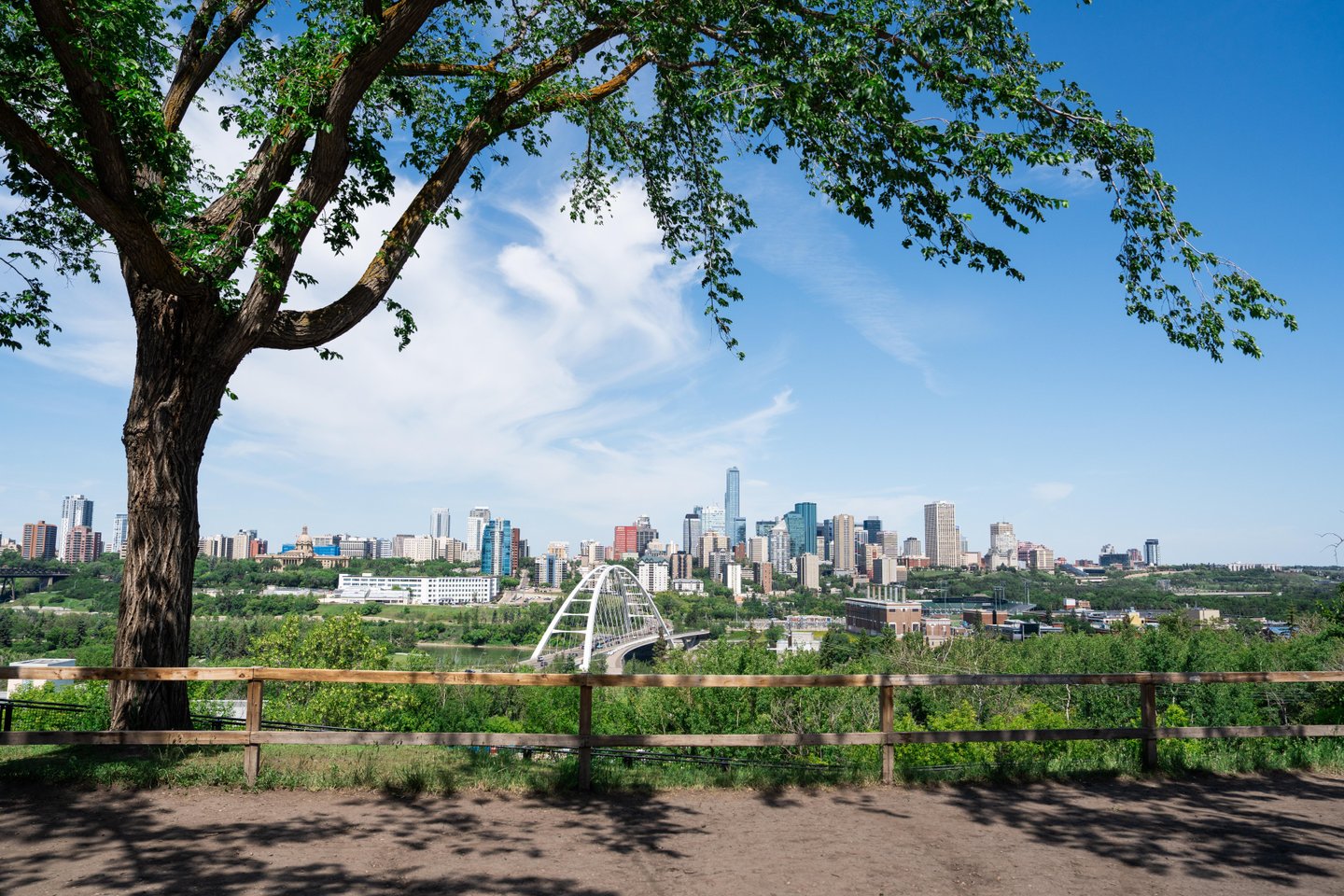
Mainly for lifestyle trending (the cost of gas) and 2026 family budgeting reasons, staycations are more popular than ever!
A recent TD survey showed Albertans are enjoying their summer without breaking their budgets. Rising costs are a big factor in reshaping how vacation planning and spending are happening. The survey highlights a clear shift toward more intentional spending, with 32 per cent of Albertans planning to spend less this summer.
There’s positive Alberta tourism and staycation news from the Tourism Industry Association of Alberta (TIAA), the not-for-profit association that advocates on behalf of all segments of Alberta’s tourism economy. TIAA stats detail a massive spike in tourism growth over the past five years as Alberta tourism recovered from the pandemic.
In the past five years, the province’s tourism economy has consistently expanded four times faster than the national average. Almost half of Albertans (49 per cent) say higher fuel costs are impacting their travel decisions, and with the popularity of staycations, 79 per cent of Albertans are supporting local or Canadian businesses and 46 per cent say it is a much stronger priority than last summer.
The Conference Board of Canada projected Edmonton as the fastest-growing economy in Canada between 2025 and 2028. A destination international study from last year specifically cites that communities with a higher concentration of visitor related industries grow faster than average. Edmonton is proving that in real time.
There is additional good news, particularly for the Edmonton region. Added to provincial, out-of-province and international visitors, staycations have become a significant component of Edmonton tourism.
“Thanks to our experiences, neighbourhoods, festivals and more, Edmonton was named a Top 10 destination city for 2025 by Lonely Planet,” says Emma Pietroleonardo, the general manager of the Edmonton Convention Centre and Explore Edmonton. “Edmonton is the second highest destination in Alberta for tourism visitor spending.”
She emphasizes that, for out-of-province and staycation visitors, Edmonton is a big draw.
“In tourism terms, it is a major urban hub. Edmonton is Alberta’s capital and second-largest city, drawing millions of visitors annually for business, education, culture and sports. It is also the gateway to the North, serving as a launch point for travel to northern Alberta and key destinations like Jasper National Park.
“Other key factors are infrastructure, like our major international airport, robust highway connections and a growing hotel and conference sector—all essential for both leisure and business tourism.”
According to a recent Destination Canada Market Profile, over two million jobs – one in 10 Canadian jobs – are tied to tourism; and, in 2024, tourism spending in the Edmonton area hit $2.5 billion. The Profile numbers show that, of the US travellers visiting Canada, 31 per cent indicated that they are likely to visit Alberta, more than half of Canadian travellers plan out-of-province trips and 61 per cent are planning to travel to Edmonton in June, July and August.
Pietroleonardo adds that, particularly for staycations, Edmonton is popular for year-round experiences.
“We are the Festival City with over 50+ festivals throughout the year; the North Saskatchewan River Valley is 22 times the size of NYC’s Central Park; Edmonton has diverse and growing culinary scene, including farm-to-table dining, local breweries and distilleries; Citadel Theatre, Winspear Centre, Métis Crossing, the Art Gallery of Alberta, Rogers Place and the ICE District; and a dynamic downtown.”
She enthusiastically mentions that Edmonton attractions like downtown’s historic arts and indie shopping district, bustling nightlife, live music, boutique stores, street art and the unique Edmonton International Fringe Festival and more are popular draws.
James Robinson is executive director of the Edmonton Downtown Business Association (EDBA) and he is gung-ho about the role of downtown for tourism and staycations.
“In Edmonton, and in many major cities, downtown is a city’s calling card and the most visible indicator of pride for a city. Downtown is one of the reasons tourists will pick the city as a destination and it’s a big part of what visitors notice and remember. Downtowns bring diverse people together, and that creates cultural hubs that contribute to quality of life and fuel the arts and cultural sectors of our economy.”
He explains that choosing Edmonton for a staycation is good for business.
“It contributes to the downtown economy and boosts the entire city as a thriving downtown. It boosts the tax base and reduces the tax pressure that Edmonton is currently facing. The tourist months are incredibly important for Edmonton’s downtown. It brings in upwards of $2 billion into the economy and research from Travel Alberta showed that by 2030, Edmonton could double that figure. The more downtown restaurants and retail spaces businesses thrive, the more Edmonton thrives.”
With much enthusiasm, he randomly highlights some popular downtown staycation hot spots (in addition to the NHL excitement and fun in Rogers Place and ICE District).
“Edmonton has several award-winning restaurants, like Bernadette’s, which was named one of Canada’s best restaurants when it first opened two years ago. Baijiu, in the Mercer Warehouse, was recently awarded the best bar patio in Canada and 104th Street has numerous places. The Downtown Farmers’ Market on Saturdays is popular. The Canadian Icehouse in ICE District has a rooftop patio that is the largest in Western Canada.”
He notes that in last summer, downtown supported more than 15 events and festivals and brought more than 500,000 visitors into the area.
“More visitors also create a perception of vibrant energy that is contagious and makes more people want to staycation in the area.”
While Edmonton staycations are more popular than ever, business tourism is also a significant factor.
“From the business events perspective, Edmonton has seen very strong recovery and upward momentum following the pandemic years,” says Joseph Baaj, director, sales & events with the Edmonton Convention Centre.
“Conferences, conventions, entertainment events and major gatherings have returned in a significant way and continue driving year-round visitation into the downtown core.”
The Edmonton Convention Centre alone welcomes hundreds of thousands of guests annually, helping support sustained economic activity downtown. Business tourism, and all of its spinoffs, continues attracting a strong mix of national and international conferences across sectors including energy, health sciences, technology, agriculture, education and manufacturing.
“Some recent big conventions and conferences have been April’s Canadian Hydrogen Convention and the Federation of Canadian Municipalities Annual Conference & Trade Show in June,” Baj notes.
“Still to come are the Alberta Municipalities Convention & Trade Show and Carbon Capture Canada in September, the Rural Municipalities of Alberta Fall Convention in November and the Greater Edmonton Teachers’ Convention Association Conference next February.”
For staycationers and tourists, the rest of the summer and the balance of 2026 looks good, but TIAA has a trending caution.
The Association projects a moderate growth rate of 1-3 per cent. While international markets are expected to show the strongest growth, TIAA forecasts waning momentum due to global economic uncertainty, high fuel and travel costs, and lingering trade tensions.