


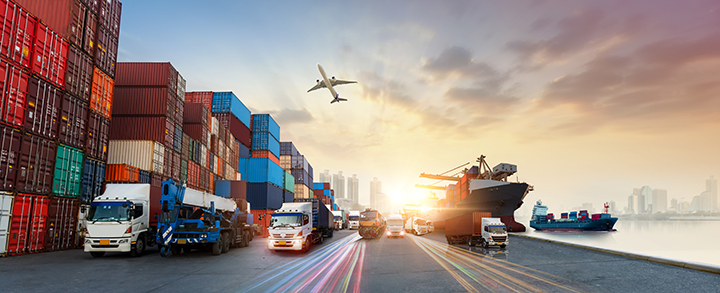
Canada accounts for nearly 8 per cent of the global logistics market, making it one of the top 10 logistics economies in the world, despite a population of just 41 million people.
Although Edmonton’s logistics and transportation sectors are strong, growing and resilient, various factors and broadsides continue to make 2026 a challenging year.
The region’s logistics sector is diversifying and thriving. The sector is managing industry positives like automation, robotics and data-driven systems, which change how goods are stored, sorted and shipped and how logistics businesses compete. There are also expected and unexpected headwinds such as altered consumer expectations, driver shortages and other labour pressures and, especially this year – tariffs, trade disruptions and gas prices.
The experts agree. This year continues to dynamic but bumpy road for local logistics.
“There’s no question that our Canadian logistics industry is challenged on many levels at the moment,” explains Michael English, transportation and logistics leader, PwC. “Amid trade disputes challenging our future exports to the US, a shortage of drivers and rising fuel costs, our logistics organizations are being pressured to reinvent themselves.”
Edmonton’s Edy Wong, associate dean, international, Alberta School of Business, points out the positives and some challenges for the region’s logistics sector.
“While we have benefitted from the growth in the oil industry, shifts in international trade relations and subsequent disruptions due to rising fuel costs and international conflicts have created some rough waters in the past eight to 12 months. Rising fuel prices and uncertainty in trade have clearly caused a change in logistics and transport strategy and compression in profit margins. The speed bumps are felt more in the transport sector rather than in the volume of warehouse space leased and inventory/industrial activities.”
The trends and industry experts agree that Edmonton’s positives heavily outweigh the temporary negatives and, for various reasons, Edmonton’s logistics hub reputation continues to grow, nationally and internationally.
Edmonton is home to many large operational centres for logistics companies. The region’s location-location provides access and proximity to many different forms of industrial production, which require freight movement, both inbound and outbound, from some of its largest facilities.
Another positive is that Edmonton offers the infrastructure in terms of potential employees, maintenance facilities, OEM solutions and more.
One example of Edmonton’s potential is Parkland County, benefiting from being located at the nexus of the CANAMEX trade corridor and the TransCanada Highway; and, CN’s mainline runs directly through the County. Stats show that Parkland’s logistics advantages, combined with the County’s supportive and business-friendly, low-tax environment, make it a major logistics draw.
However, some recent negatives are also a factor, such as cross-border trade and tariff issues, diesel prices, driver shortages, adapting to technology and AI and capacity constraints due to high operating costs, carrier exits and shifting North American freight demands.
“The carriers and logistics organizations that are well diversified across product categories fared better in the face of trade obstacles,” English says. “Last year, rail was a record for crops moved. Intermodal growth is more challenged, tied more closely to domestic GDP growth.
“Although fuel prices have affected consumption, from a pure transportation perspective it is usually passed on to shippers in the form of fuel surcharges. Ultimately, it’s consumers who pay.”
He notes that the driver shortage is a critical factor and that, over the last decade, more trucking companies have come to rely on incorporated personal drivers who are often responsible for their own equipment.
According to David Niebach, president & CEO of Complete Shipping Solutions, one of the leading third-party logistics companies in Canada, “With the increased cost of warehousing in the lower mainland, Edmonton has become a more affordable Western distribution hub. As the gateway for the North, we’re uniquely positioned to facilitate East-West trade as well as servicing the development in Northern Alberta and NWT.
“There has been a significant consolidation in the transportation market over the past few years, but the longest freight recession in North America officially ended this past April, after tightening supply in the market and increasing rates.”
He emphasizes that the political unrest in the Middle East has also triggered increased container rates coming to North America.
Wong suggests that diesel prices are a crucial factor and the proverbial 800-pound elephant in the logistics sector.
“Diesel is one of the largest variable costs in trucking. Large carriers can often pass some of that increase to customers through fuel surcharges, but there is usually a lag and smaller carriers may have less bargaining power. So, the immediate impact of rapidly rising diesel prices is margin compression.
“In terms of indicators of the severity of this problem, the Alberta government’s diesel index shows a sharp increase early this year. Its rack-rate index went from 103.54 cents/litre in January to 143.20 in March and increased to 154.94 in April.”
He crunches numbers showing that recent internationally induced fuel price spikes have caused an increase in Edmonton diesel to about $2.12/litre in late-August, compared with $1.69 in late June, and says, “That is significant!”
Niebach underscores the impact.
“The cost of fuel and fuel surcharges has been a major increase in the total cost of transportation, which can add up to 30 per cent to the rate. In addition, carriers have shortened the time horizon on quote validity due to volatility of fuel prices.”
With so many variables impacting the logistics sector, insiders and experts like Wong, English and Niebach are reluctant about any logistics sector crystal ball gazing.
“The freight recession is over, but the trade dispute with the USA may show impacts on our overall supply chain going forward,” Niebach says. “On the flipside, we will most likely see an uptick in warehousing needs, due to onshoring of products.”
English suggests 2027 and beyond relies on specifics, saying, “The outlook in the shorter term will vary based on the category shipped. Last year, grain transport companies did very well, moving a record quantity, while carriers that ship steel, dairy or appliances from the US to Canada may experience significant headwinds in 2027.
“The key is to diversify and understand trends in the longer term. PwC’s New Markets, New Routes for Canadian Logistics explores the three categories that are most likely to contribute to our policy ambition of doubling our non-US exports by 2035. Logistics companies should shore up capacity now to support the movement of energy, minerals and agri-food products.”
The back-and-forth uncertainty about Canada-U.S. trade, the summer’s collapse of negotiations, the increased tariffs and the ongoing surge in gas prices make the long-term future of logistics somewhat volatile.
Wong is cautiously optimistic but not sure. He concludes, “The uncertainty created by the trade situation and expected adverse economic consequences for Canada is definitely a factor. While the Alberta Government’s projected deficit has turned into a surplus, the prospects for consumers and workers as well as our oil exports are rather uncertain. How the logistics sector evolves or changes in 2027 will depend on events that will unfold in the balance of the year.”