


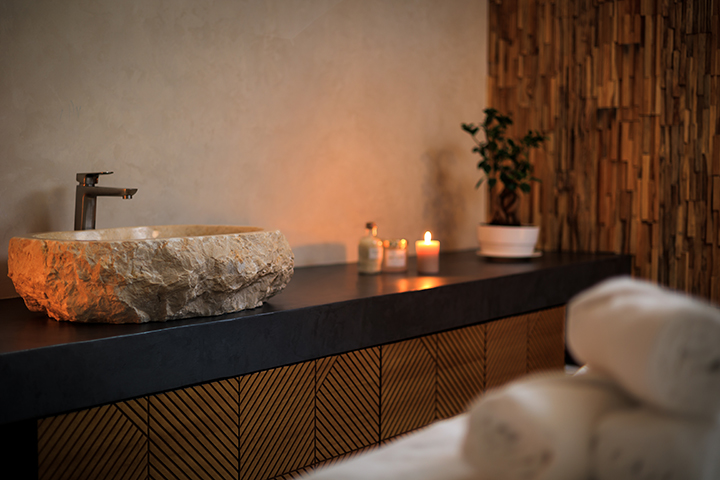
Medispas offer a broad range of options, treatments and services. The concept is a hybrid of a medical clinic and a day spa. Medispas are a unique fusion of medical technology and traditional spa indulgence, offering some procedures under medical supervision. While the focus goes way beyond aesthetics and pampering, and both medispas and traditional spas offer relaxation and rejuvenation, medispas stand out due to the medical nature of their treatments.
Procedures in medispas are often overseen or directly performed by medical professionals, ensuring both safety and efficacy. Given the available medical interventions, medispas are also subject to more stringent regulations and certifications than their traditional “spa” counterparts.
In the past five years or so, there has been a noticeable increase in demand for medispa services.
“We’ve noticed a steady and very real shift toward non-invasive treatments in Edmonton,” says Jara Wu, co-owner of Encore Medical Rejuvenation. “Clients want results, but they also want to stay social ready with little to no downtime. Procedures like injectables, microneedling with PRF, gentle resurfacing lasers, medical peels and even non-surgical body treatments have all grown in popularity.”
Encore co-owner Dr. Andrew Ah Seng explains that medispas are a Canadian phenomenon.
“From a clinical standpoint, it aligns with what the national data is showing. Non-surgical aesthetic treatments are growing at a strong double digit rate in Canada. People are more informed and more comfortable with medical aesthetics than they used to be, and the technology has become safer and more predictable. The growing interest makes sense.”
Although medispa options vary significantly – from people wanting traditional skin care to more drastic changes to an increasing menu of medical and non-invasive procedures – the medispa experience is personal.
Common options include skincare treatments like chemical peels, microdermabrasion, advanced laser hair removal and anti-aging procedures like Botox injections, fillers or innovative skin-tightening procedures.
Body contouring is also popular, with non-invasive treatments like CoolSculpting or Ultherapy offering body shaping without surgery. The contemporary medispa menu also includes hair removal, scar reduction or solutions for specific skin conditions.
Wu explains that, in Edmonton, injectables are at the top of the list. Botox-style treatments and dermal fillers are consistently in high demand. Microneedling with PRF is also extremely popular because people love the natural collagen-boosting results. Also popular are pigment and vascular laser treatments and medical facials.
Ah Seng suggests that combination treatments are becoming increasingly sought after, “For example, pairing a laser with a peel or adding skin-boosting injectables to a resurfacing plan. People want efficiency and longevity, and combined therapies deliver that.”
As medispas innovate and grow way beyond the dated “beauty parlor” stereotypes, they are now popular components of health and wellness. It is not just about appearance.
“It’s about overall well-being,” Wu points out. “A lot of people don’t realize how many medispa treatments also have wellness benefits. Botox can help with migraines and excessive sweating. Microneedling strengthens the skin barrier, softens scars and increases collagen. Lasers can reduce sun damage and improve long-term skin health. Non-invasive body treatments can help people feel more confident and even more comfortable in their daily movement.”
Dr. Ah Seng adds that, “Most high-quality cosmetic treatments have measurable physiological effects. Collagen stimulation, improved circulation, reduced inflammation and enhanced skin barrier repair are all part of the process. When you improve the skin’s health, you improve its function, and that contributes to a sense of wellness.”
Medispa innovation is constantly updating and changing. Wu cites picosecond and fractional technologies to treat pigment, texture, acne scarring and even sun damage with less downtime and fewer sessions. Ah Seng adds that newer lasers are much more refined, delivering energy in a controlled way that protects the surrounding skin while improving results.
Increasingly, employees, employers and employee benefits providers are embracing medispa services as bona fide health and wellness.
“There has certainly been an increase in the utilization of private health care services as well as wellness and medispa services over the last 10 years,” notes Randy Parish, founder and partner of Edmonton’s Innovative Benefits, a provider of standalone Health Spending Accounts in Alberta and across Western Canada.
“A wellness and lifestyle spending account plan provided by an employer is perfectly suited to assist employees with the funding of these types of services. The plans often include a wide variety of fitness-related expenditures as well as fees and services charged by a medispa.”
He adds that the biggest differentiator between a Health Spending Account (HSA) and a Wellness Spending Account (WSA) is that the HSA is a non-taxable benefit program which employers may provide to employees. For an expense to qualify under the non-taxable HSA, it must meet CRA’s definition of medical expense.
“While the list of eligible expenses is very broad, they are specifically defined by the CRA; eligible medical expenses can be claimed on a tax return.”
Parish highlights specifics. Some medispa expenses can be covered by the HSA if they are medically necessary and prescribed by a licensed medical practitioner. Treatments for acne or other specific skin conditions may be covered if deemed medically necessary.
Laser tattoo removal may be eligible if there is a medical reason, such as an allergic reaction or a psychological impairment and the removal is prescribed by a medical professional.
Microblading may be covered to address conditions such as alopecia (hair loss), provided it is medically necessary and prescribed. Botox injections are eligible if prescribed for the treatment of migraine headaches.
Having a medispa service covered as an employee benefit is more complicated than just wanting it. There are coverage eligibility procedures.
The primary determinant for coverage is that the service must be related to the diagnosis, treatment, prevention of a disease or the maintenance of well-being, not just enhancement of appearance. There is usually a prescription or a referral required.
“Most medispa expenses are not eligible to be claimed under an HSA, although they are eligible and can be claimed under a WSA program, if offered by the employer,” he says.
Wu explains that many employers are expanding employee wellness benefits to include things like wellness credits, flexible health spending allowances or lifestyle stipends. Some employees use those for skin health treatments or wellness-focused therapies.
“It is still an emerging trend, but it is definitely growing in Canada. Most of these benefits do not require a doctor’s note because they function more like a reimbursement credit.”
Despite the innovative techniques and new technologies, there is a lingering misunderstanding and stereotypes about medispas.
“People often think medispas are purely cosmetic or superficial. They also assume all injectors and all lasers are the same. That could not be further from the truth!” Wu says. “A reputable medispa is a medical clinic first. We focus on education, safety, and evidence-based results. The aesthetics are just the outcome.”